
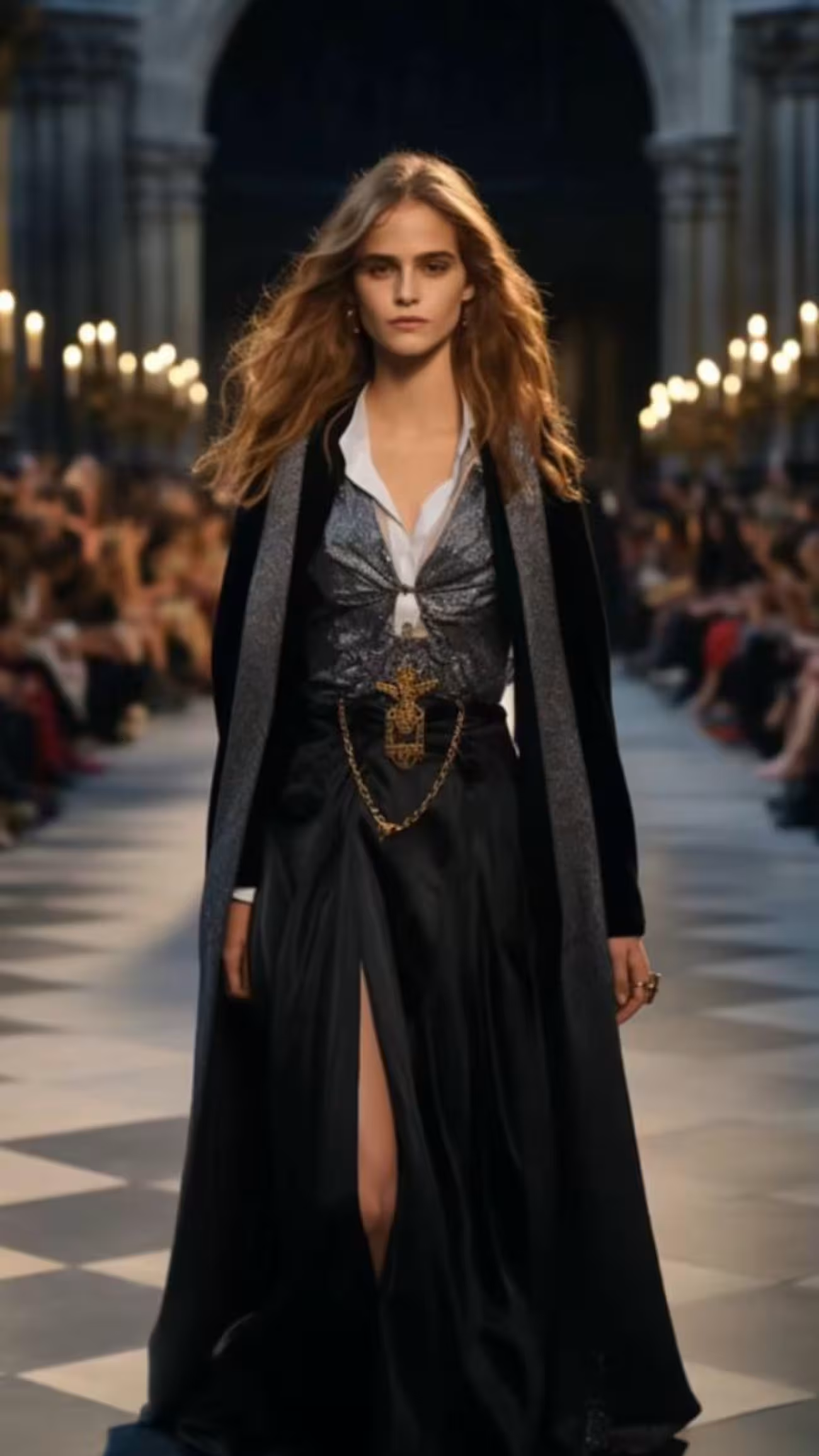
The worlds of Harry Potter and Balenciaga came together in an unexpected internet phenomenon when an AI-generated fashion video transformed the famous wizarding characters into high-fashion runway models. Combining the fantasy universe created by J.K. Rowling with the distinctive aesthetic of the luxury fashion house, the concept presented a surreal alternative version of Hogwarts that quickly attracted millions of online viewers.
Although frequently described as a Harry Potter and Balenciaga collaboration, the project was not an official partnership between the two brands. It was created independently by Alexander Niklass, a Berlin-based photographer and digital creator known as demonflyingfox. His video, titled Harry Potter by Balenciaga, was uploaded to YouTube on March 15, 2023, and became one of the early viral examples of AI-generated entertainment.
The concept reimagined familiar characters, including Harry Potter, Hermione Granger, Ron Weasley, Severus Snape, and Hagrid, as models wearing oversized designer clothing, dramatic leather outfits, and gothic-inspired fashion. Their recognizable appearances were transformed through exaggerated facial features, cinematic lighting, and synthetic dialogue that humorously incorporated references to Balenciaga.
The success of the original video demonstrated how generative artificial intelligence could combine recognizable fictional characters with established fashion aesthetics to create entirely new forms of digital entertainment. The creator subsequently expanded the concept, returning with updated productions in 2026 that showcased more advanced AI-generated visuals.
What Is Harry Potter by Balenciaga?
Harry Potter by Balenciaga is an AI-generated parody that imagines what the characters from the Harry Potter films might look like if they appeared in a luxury fashion advertising campaign.
Instead of traditional wizard robes, school uniforms, and magical accessories, the characters wear contemporary designer-inspired clothing. Their appearance reflects an exaggerated interpretation of high fashion, featuring oversized silhouettes, dark colors, sharp tailoring, leather garments, and unconventional styling.
The video also changes the way characters speak. Familiar dialogue from the Harry Potter films is rewritten to incorporate fashion-related references, creating humorous exchanges that contrast with the serious atmosphere of the original movies.
One of the most recognizable lines is Hagrid's altered introduction to Harry:
"You're Balenciaga, Harry."
The humor comes from placing an ordinary moment from the wizarding world into an entirely different cultural setting. Rather than introducing Harry to magic, the scene introduces him to luxury fashion.
The result is a deliberately exaggerated combination of fantasy storytelling, fashion advertising, internet humor, and artificial intelligence.
Who Created the Harry Potter and Balenciaga AI Concept?
The original video was created by Alexander Niklass, a Berlin-based photographer and digital artist who publishes his work under the name demonflyingfox.
Niklass became widely recognized for experimenting with generative AI to transform familiar entertainment characters into unusual visual concepts. His work combines digital imagery, synthetic voices, animation, and editing to produce short films that resemble advertisements or cinematic scenes.
In an interview with The New Yorker in April 2023, Niklass explained how artificial intelligence allowed him to create film-like moments using a combination of accessible digital tools.
His approach involved more than simply generating images. He developed the concept, selected the characters, designed their visual appearance, created dialogue, and combined the generated elements into a coherent parody.
His work attracted attention because it demonstrated how individual creators could produce visually distinctive entertainment without the resources traditionally required for professional film production.
How Artificial Intelligence Created the Balenciaga Fashion Designs
The original 2023 video combined several AI technologies to create its distinctive appearance and animation.
1. Midjourney for AI-Generated Fashion Images
Midjourney was used to generate the initial character images. Niklass created prompts describing fashion models with exaggerated facial features, dramatic styling, and Balenciaga-inspired clothing.
The process transformed recognizable Harry Potter characters into digital fashion models while retaining enough visual similarities for audiences to identify them.
Instead of reproducing their traditional costumes, the generated images presented them in dark designer-inspired outfits, including leather jackets, oversized coats, tailored suits, and dramatic accessories.
The exaggerated cheekbones, narrow facial features, and serious expressions helped create the distinctive appearance associated with the parody.
2. ElevenLabs for Synthetic Character Voices
The project also used ElevenLabs, an AI voice-generation platform, to create synthetic voices resembling those associated with the original Harry Potter film characters.
These generated voices allowed the digital characters to deliver modified dialogue without requiring the original actors to record new performances.
The dialogue was rewritten to incorporate references to luxury fashion, creating a humorous contrast between the characters' familiar personalities and their new designer identities.
3. D-ID for Facial Animation
After generating the character images and voices, Niklass used D-ID to animate the portraits.
The technology added subtle facial movements, lip synchronization, blinking, and head movements that made the static images appear to speak.
The characters' distinctive head tilts and expressions also resembled the poses frequently seen in fashion photography and runway campaigns.
Combining these technologies allowed the creator to produce a short video that looked considerably more cinematic than a conventional AI-generated image slideshow.
How Harry Potter Characters Were Transformed Into Balenciaga Models
The concept became particularly entertaining because it applied a consistent fashion aesthetic to characters with very different personalities and appearances.
Harry Potter
Harry was reimagined as a serious luxury-fashion model, replacing his familiar Hogwarts appearance with contemporary designer-inspired clothing. His recognizable glasses and facial features remained important elements of the transformation.
Hermione Granger
Hermione received a sophisticated high-fashion interpretation, with a more dramatic appearance than her traditional school-uniform look. Her character was adapted to fit the video's dark editorial atmosphere.
Ron Weasley
Ron was transformed from a recognizable Hogwarts student into an unconventional runway model. His exaggerated facial features and oversized fashion styling contributed to the parody's deliberately surreal appearance.
Severus Snape
Snape was particularly suitable for the concept because his original appearance already featured dark clothing and a serious expression. The AI transformation emphasized these characteristics through dramatic designer-inspired styling.
Hagrid
Hagrid became one of the most recognizable figures in the video. His enormous physical appearance and familiar facial features created a striking contrast with the exaggerated fashion-model aesthetic.
Dobby
Dobby was also included in the AI-generated interpretation, demonstrating how the concept extended beyond human characters to other recognizable figures from the wizarding world.
Rather than attempting to reproduce the original movie costumes, the creator used recognizable character identities as the foundation for a completely different visual direction.
Why Did Harry Potter by Balenciaga Become Viral?
The video's popularity came from its unusual combination of two globally recognizable cultural subjects: the Harry Potter franchise and luxury fashion.
Harry Potter is associated with magic, friendship, adventure, and Hogwarts, while Balenciaga is known for its unconventional approach to contemporary luxury fashion.
Combining these contrasting identities created an instantly recognizable concept that audiences could understand without extensive explanation.
Several factors contributed to its viral success.
- Recognizable characters: Familiar faces from the Harry Potter films made the video immediately appealing to fans.
- Unexpected fashion transformations: Traditional wizarding characters appeared in exaggerated luxury clothing and dramatic runway-inspired outfits.
- AI-generated voices: Synthetic dialogue made the characters appear to participate in a completely new fictional advertising campaign.
- Internet humor: Rewriting familiar Harry Potter dialogue with fashion references created memorable comedic moments.
- Visual novelty: The combination of realistic-looking faces, animation, and unusual styling demonstrated the creative possibilities of generative AI.
The original video also inspired creators to produce similar AI-generated fashion parodies featuring other entertainment franchises, including Star Wars, The Lord of the Rings, and Marvel characters.
What began as an individual creative experiment consequently developed into a recognizable internet meme format commonly described as Balenciaga AI videos.
Harry Potter by Balenciaga Returns With New AI Videos in 2026
The popularity of the original concept did not disappear after its initial viral success. In 2026, demonflyingfox revisited the idea with longer and more visually ambitious productions.
The updated videos demonstrated how rapidly AI-generated video technology had developed since the original 54-second production in 2023.
Harry Potter by Balenciaga (2026)
The 2026 remake expanded the original concept into a longer production, with more elaborate scenes, character interactions, and cinematic visual sequences.
Rather than relying primarily on animated portraits and short dialogue exchanges, the updated version presented a more developed fictional fashion universe.
The production reflected improvements in AI video generation, particularly in character movement, scene continuity, and the ability to create more complex visual sequences.
Harry Potter by Balenciaga 2 (2026)
The second installment was published on June 5, 2026, continuing the creator's reinterpretation of the wizarding world through luxury fashion and AI-generated comedy.
Published on the demonflyingfox YouTube channel, the video continued the original parody format while exploring additional character designs and visual situations.
Harry Potter by Balenciaga 3 (2026)
The third installment arrived on October 22, 2026, extending the series with another AI-generated fashion parody.
The production continued the combination of dark luxury styling, recognizable Harry Potter characters, synthetic dialogue, and exaggerated fashion imagery.
The creator's published video description identifies the production as a satirical parody and explicitly states that the characters and references belong to their respective owners. It also clarifies that the work is not affiliated with the original franchise.
The third installment demonstrates how an idea that began as a short viral experiment can develop into a continuing creative series as AI production tools become more capable.
What AI Tools Are Used in the Newer Balenciaga Videos?
The technology used in AI-generated video production has evolved considerably since the original 2023 release.
In the description accompanying the October 2026 installment, demonflyingfox lists several tools associated with his production workflow.
| AI Tool | Published Use |
|---|---|
| Kling AI | AI video generation |
| InVideo | Video editing |
| ElevenLabs | AI-generated voices |
| Suno | AI music generation |
| Epidemic Sound | Music and sound resources |
These tools represent a different production approach from the original video, which relied on Midjourney, ElevenLabs, and D-ID.
The newer workflow makes it possible to create longer sequences with more elaborate movement, sound design, and visual transitions.
However, the exact contribution of each tool to every individual scene has not been independently documented. The list reflects the tools disclosed in the creator's published video description.
Was the Harry Potter and Balenciaga Collaboration Official?
Despite the video's advertising-style presentation, there is no verified evidence that Harry Potter rights holder Warner Bros. or luxury fashion house Balenciaga commissioned or officially approved the project.
The original production was an independent AI-generated parody, not a commercial fashion collection, licensed product release, or official advertising campaign.
The distinction is important because the video uses recognizable characters, visual references, and brand-inspired styling that can make the concept resemble a genuine collaboration.
The creator's 2026 video description also explicitly identifies the production as satire and parody and states that it is not affiliated with the original franchise.
Anyone encountering promotional images or merchandise claiming to be part of an official Harry Potter x Balenciaga collection should therefore verify the announcement through the relevant brand's official channels.
AI Fashion, Copyright, and the Future of Digital Creativity
The Harry Potter by Balenciaga phenomenon also raises broader questions about the relationship between artificial intelligence, intellectual property, and the fashion industry.
AI tools make it increasingly easy for independent creators to combine recognizable characters, fashion aesthetics, brand identities, and synthetic voices into new digital productions.
However, the use of copyrighted characters, recognizable performers' likenesses, synthetic voice imitation, and protected brand elements can raise legal and ethical questions.
The legality of an individual production depends on factors such as the jurisdiction, purpose, commercial use, applicable intellectual property rights, and available legal exceptions. An AI-generated parody is not automatically exempt from every copyright, trademark, or publicity-rights issue.
The trend also creates challenges for fashion companies. Unofficial AI-generated campaigns can generate considerable publicity while potentially confusing audiences about whether a brand has endorsed or participated in a particular project.
At the same time, these experiments demonstrate how AI can become a creative tool for exploring new visual directions, testing fashion concepts, and producing entertainment outside traditional studio environments.
As the technology continues developing, the distinction between official advertising, independent fan art, digital fashion concepts, and AI-generated parody will become increasingly important.
Conclusion
Harry Potter by Balenciaga began as an experimental AI-generated parody by Alexander Niklass, known as demonflyingfox, in March 2023. By transforming familiar wizarding characters into exaggerated luxury-fashion models, the creator produced a memorable combination of fantasy, fashion, synthetic voices, and internet humor.
The original video became an influential example of early viral AI-generated entertainment and inspired similar fashion parodies featuring other popular fictional franchises.
The concept returned in 2026 through longer productions, including a second installment in June and a third video published in October. These releases demonstrated the growing capabilities of AI video generation and the potential for independent creators to develop more elaborate digital productions.
Despite its advertising-style presentation, Harry Potter by Balenciaga remains an independent creative project rather than an official partnership between Warner Bros. and Balenciaga.
Its lasting significance lies in showing how artificial intelligence can bring familiar fictional worlds into unexpected creative settings while changing the way audiences experience digital fashion, parody, and online entertainment.