
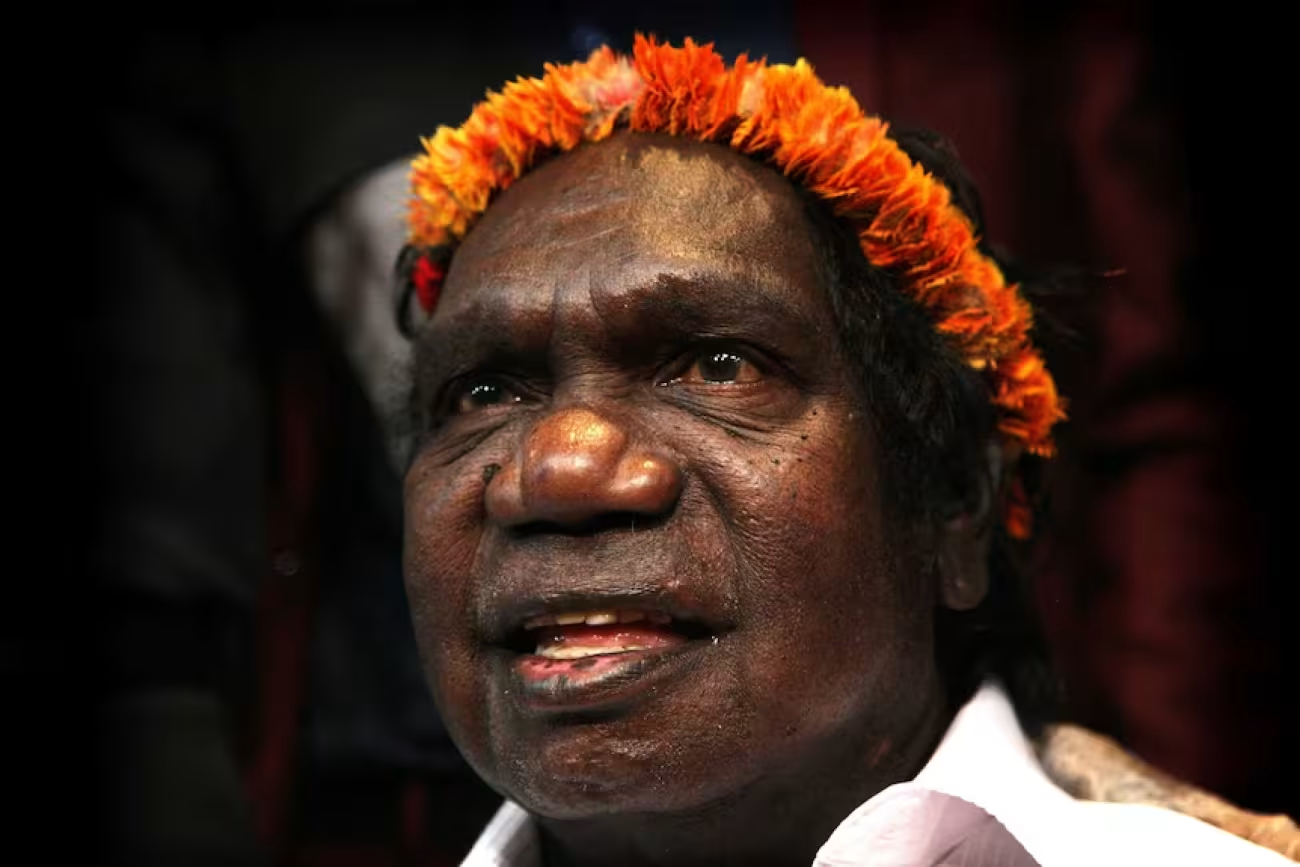
Mandawuy Yunupingu, the celebrated Australian musician and frontman of Yothu Yindi, died on June 2, 2013, at his home in Yirrkala, Eastern Arnhem Land. He was 56 years old. His death followed a prolonged battle with kidney disease, which had significantly affected his health and ability to perform.
Yunupingu was more than a successful musician. He was an educator, community leader, and prominent advocate for Aboriginal rights and cultural recognition. His work with Yothu Yindi, particularly the internationally acclaimed song "Treaty," helped bring Indigenous Australian issues to a much wider audience.
What Was Mandawuy Yunupingu's Cause of Death?
Mandawuy Yunupingu died from kidney disease after struggling with the condition for several years.
He was diagnosed with end-stage kidney failure in 2007, a serious condition in which the kidneys can no longer adequately filter waste and excess fluid from the blood.
His condition eventually required regular dialysis treatment. In a 2009 episode of ABC's Australian Story, Yunupingu openly discussed the impact of kidney failure on his life and explained how he had become dependent on dialysis.
He described the diagnosis as a devastating turning point, particularly because he had previously been enjoying an active career as a musician and community leader.
In the years before his death, his health continued to deteriorate. He eventually died at home in Yirrkala, surrounded by his family.
Some initial news reports stated that officials had not immediately disclosed an official cause of death. However, subsequent biographical records from Australia's National Portrait Gallery identify kidney disease as the cause.
Mandawuy Yunupingu's Final Years and Health Struggles
Yunupingu's illness forced him to reduce his musical activities and confront significant changes in his daily life.
He discussed his diagnosis publicly to raise awareness of kidney disease, particularly among Aboriginal communities, where chronic kidney conditions have been a major health concern.
His personal experience became an opportunity to draw attention to inequalities in access to healthcare and the challenges faced by people living in remote Indigenous communities.
Although his health limited his activities, he remained committed to promoting Yolngu culture, Indigenous recognition, and education.
In December 2012, Yothu Yindi was inducted into the ARIA Hall of Fame. The recognition came approximately six months before his death and celebrated the band's significant contribution to Australian music.
Who Was Mandawuy Yunupingu?
Mandawuy Djarrtjuntjun Yunupingu was born in 1956 in northeast Arnhem Land, Northern Territory, Australia. He belonged to the Yolngu people and became one of the country's most influential Indigenous cultural figures.
Before becoming internationally recognized as a musician, he pursued a career in education. He completed a university degree in education in 1987 and later became the first Indigenous Australian school principal in Arnhem Land.
He served as principal of Yirrkala Community School, where he promoted an educational approach that combined Western academic teaching with traditional Indigenous knowledge.
His philosophy became known as "Both Ways" education, emphasizing the importance of respecting and integrating different cultural systems of learning.
Yothu Yindi and the Success of "Treaty"
In 1986, Yunupingu co-founded Yothu Yindi, a band that brought together Indigenous and non-Indigenous Australian musicians.
The group developed a distinctive musical style combining traditional Yolngu instruments, languages, and rhythms with contemporary rock and pop music.
Their breakthrough came with the 1991 album Tribal Voice, which introduced their music to international audiences.
Its best-known single, "Treaty," became one of the most influential Australian songs addressing Indigenous political recognition.
Co-written with musician Paul Kelly and other collaborators, the song responded to former Prime Minister Bob Hawke's 1988 promise to work toward a treaty with Indigenous Australians.
The promise had not been fulfilled, and the song became a powerful expression of frustration over the lack of progress.
"Treaty" reached No. 11 on the Australian singles chart and received the Australian Performing Right Association's Song of the Year award.
Yothu Yindi's success demonstrated that Indigenous musical traditions could become an integral part of contemporary Australian popular culture without losing their cultural identity.
Mandawuy Yunupingu Was Named Australian of the Year
In 1992, Yunupingu was named Australian of the Year in recognition of his achievements in music, education, and reconciliation between Indigenous and non-Indigenous Australians.
The award acknowledged his ability to use music and education to create greater understanding of Aboriginal culture and political concerns.
He continued working to promote Indigenous rights and cultural recognition throughout his career, including through the Yothu Yindi Foundation, which he helped establish to support Yolngu culture and community development.
His contributions extended beyond entertainment, making him an important figure in Australia's cultural and social history.
Mandawuy Yunupingu's Family
Mandawuy Yunupingu was survived by his wife, Yalmay Marika, and six daughters.
He died at his home in Yirrkala, Eastern Arnhem Land, where he was surrounded by family during his final hours.
His family and community mourned the loss of a man whose influence extended across music, education, and Indigenous leadership.
Mandawuy Yunupingu's Legacy
Yunupingu's influence remains significant in Australian music and Indigenous cultural history.
His achievements demonstrated how music could become a powerful platform for political expression, cultural preservation, and communication between communities.
In 2014, he was posthumously appointed a Companion of the Order of Australia (AC), recognizing his contributions to music, Indigenous social justice, education, and cross-cultural understanding.
His work also continues through the Yothu Yindi Foundation and its annual Garma Festival, which celebrates Yolngu culture, knowledge, and Indigenous leadership.
Conclusion
Mandawuy Yunupingu died on June 2, 2013, aged 56, following years of serious kidney disease. Diagnosed with end-stage kidney failure in 2007, he underwent regular dialysis before his health eventually deteriorated.
Although his death marked the loss of one of Australia's most influential musicians, his contribution extended far beyond the music industry. Through Yothu Yindi, the song "Treaty," and his work in education and Indigenous advocacy, he helped bring Yolngu culture and Aboriginal political issues to national and international attention.
His legacy remains an important part of Australia's musical, educational, and cultural history.